Dynamic ticket pricing: what the UK rules mean for independents
Dynamic ticket pricing is still legal in the UK. What the Oasis findings and a planned resale cap mean for how independent promoters and venues set tiers.

The UK government will not legislate on dynamic pricing for live events. It said so on 19 November 2025, after 105 responses from consumers, campaign groups, ticketing platforms, promoters, venues and industry bodies, and one of its reasons was the smaller end of the business: further rules, it said, "could impose unsustainable burdens on the many small and medium-sized live events businesses".
If you run independent shows, a venue or a festival, you will come away knowing what the rules now expect, where tiered selling fits into them, and how I would set prices with that in mind.
Dynamic pricing is legal, and the rules are about disclosure
The government's view is that price transparency is already written into consumer law, and that the Competition and Markets Authority (CMA) now has the tools to enforce it, including fines of up to 10% of global turnover. Rather than write new rules, it will monitor how the industry responds to the CMA's findings and practical guidance on dynamic pricing.
The CMA's own update, published in June 2025, is fairly relaxed about the practice itself. It says dynamic pricing can help businesses "make better use of their capacity", and gives "reducing the number of empty seats" as an example of what that means. What worries it is buyers who are unaware it is being used, buyers who "feel pressured to make quick decisions because prices may rise suddenly", and vulnerable consumers ending up paying more than others.
For a promoter, then, changing prices is allowed. The test is whether buyers knew prices could change before they joined the queue.
Oasis was a tier problem, and independents sell in tiers
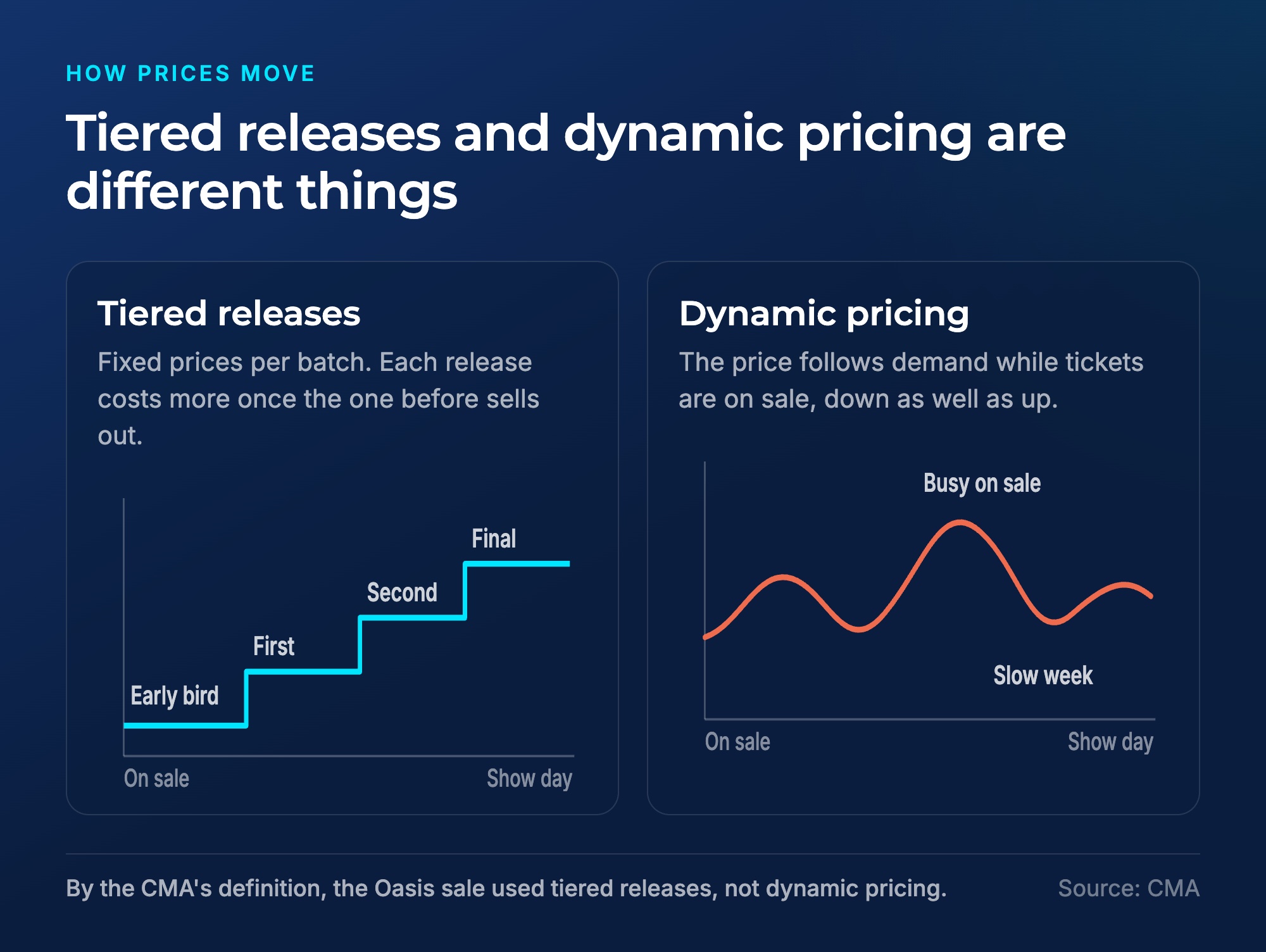
By the CMA's definition, the Oasis on-sale that started the row was not dynamic pricing at all. Ticketmaster's prices did not move with demand. Standing tickets "were released at one price and, once they had quickly sold out, the remaining standing tickets were released at a much higher price."
Anyone who has sold a club night or a festival in release tiers will recognise that: early bird, first release, second release, final release. What the regulator looked at was a very ordinary way of selling tickets.
In September 2025 the CMA secured undertakings from Ticketmaster. The company will tell fans 24 hours in advance when tiered pricing is being used, show the price range while fans wait in an online queue and update it when cheaper tickets sell out, and describe ticket types accurately. The CMA had found "platinum" tickets selling for almost 2.5 times the price of standard ones. Ticketmaster will report to the CMA on compliance for two years.
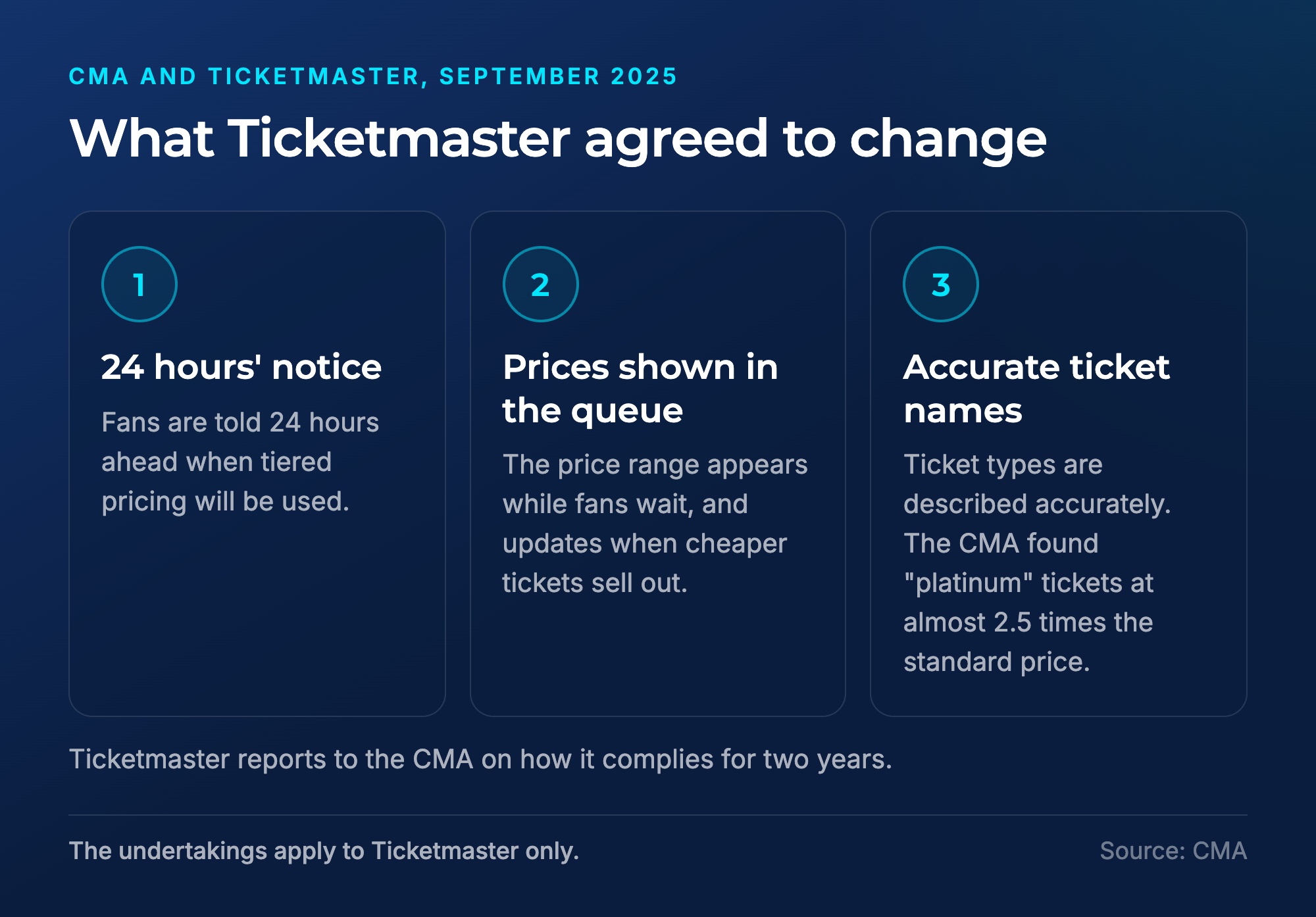
Strictly, those undertakings apply only to Ticketmaster. I would still treat them as the best public description of what the regulator considers fair tiered selling, especially as the government has said it will watch how the sector complies.
A resale cap weakens the case for high early prices
One argument for raising prices during a busy on-sale is that when face value sits below what fans will pay, the difference ends up with touts. On 19 November 2025 the government announced plans to make reselling tickets above their original price illegal. Resale platforms would have to enforce the cap, and individuals would be barred from reselling more tickets than they were allowed to buy in the first place. The government estimated fans would save £112 million a year and that around 900,000 more tickets would be bought from primary sellers.
If that becomes law, a first release that sells out in minutes stops feeding a resale market at a mark-up. I think that removes most of the reason for an independent to push early prices up in order to beat the touts.
For grassroots rooms, the pressure is on filling them
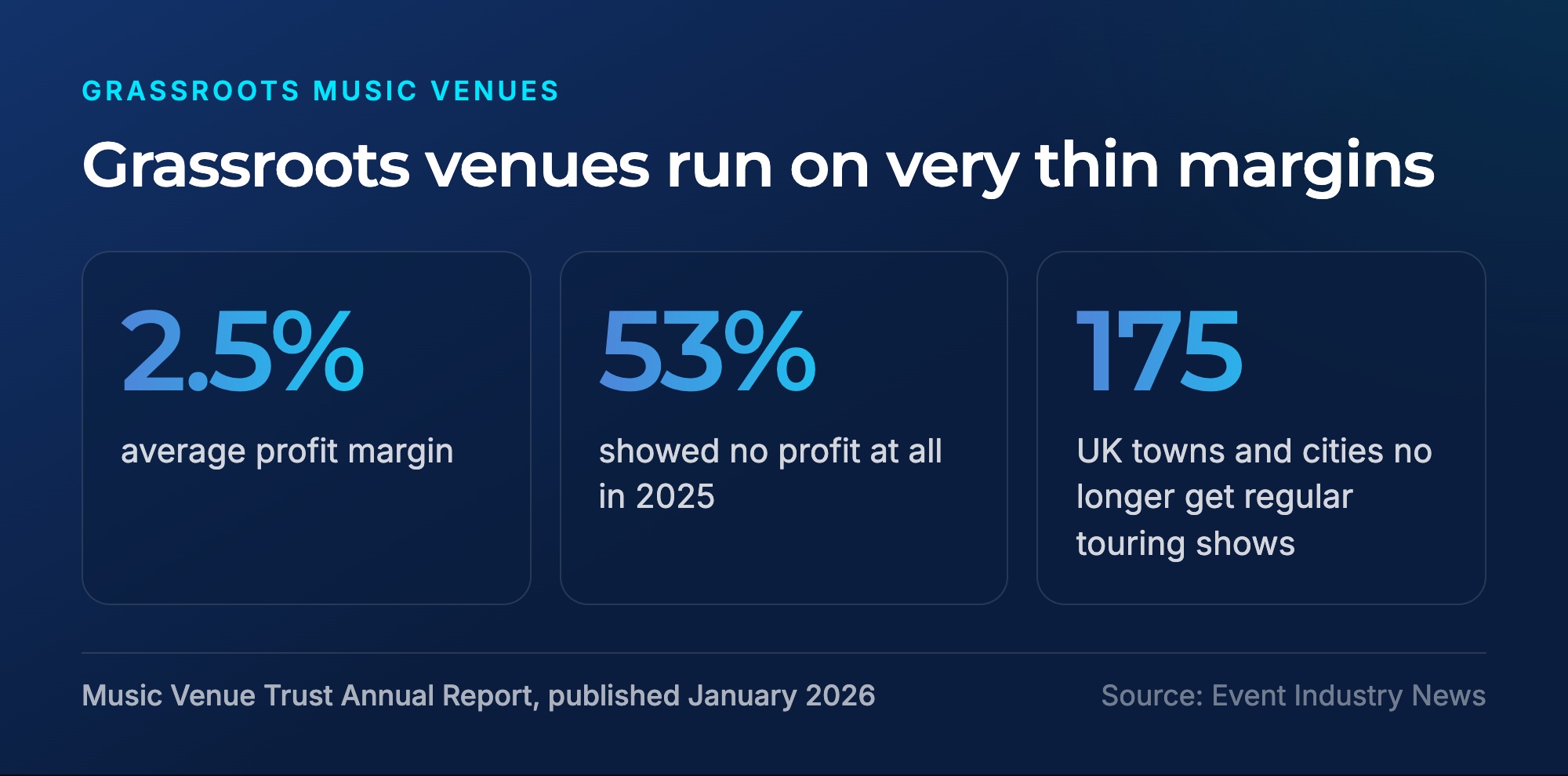
Music Venue Trust's annual report, published in January 2026, found grassroots venues operate on average profit margins of 2.5%, and 53% of them showed no profit at all in 2025. It also found that 175 UK towns and cities no longer receive regular touring shows.
In my view the argument about surge pricing belongs mostly to the biggest on-sales, where far more people want tickets than there are tickets to sell. A 300-capacity room on a Thursday seldom has that problem. The CMA's line about empty seats matters more here, because pricing that responds to demand can move down as well as up. On a 2.5% margin, a late price drop that fills the room is worth more than a premium tier nobody buys.
How I would price an independent show now
- Publish the structure before the on-sale: how many tiers there are, what each costs, and roughly how many tickets sit in each.
- Show buyers the price range while they wait, and never change a price while someone is paying.
- Name ticket types accurately. The Ticketmaster undertakings require it, and a premium label on an ordinary ticket was part of what the CMA objected to.
- Use downward moves as a normal tool. A clearly labelled late release at a lower price is a response to demand too.
- Spend most of your effort on demand itself. Pricing divides up the people who already want to come, and a room on a slim margin needs more of them.
FAQ
Is dynamic pricing for concert tickets legal in the UK?
Yes. In November 2025 the government said it does not intend to bring forward new legislation on pricing practices in the live events sector. It considers price transparency already part of consumer law and will monitor how the industry responds to the CMA's findings and guidance. The CMA's concerns are about buyers who do not know prices can change, or who feel pressured to decide quickly because prices may rise.
What is the difference between dynamic pricing and tiered pricing?
Dynamic pricing means prices move in response to demand. Tiered pricing releases batches of tickets at fixed prices, and the next batch costs more once the previous one sells out. The CMA treats them as different practices. Its work on the Oasis sale shows that tiered pricing still needs clear disclosure, and Ticketmaster has agreed to give fans 24 hours' notice when it is used.
Did Ticketmaster use dynamic pricing for Oasis tickets?
Not by the CMA's definition. The CMA found that standing tickets were released at one price and, once those sold out, the rest were released at a much higher price. It also found platinum tickets selling for almost 2.5 times the price of standard ones. Ticketmaster agreed to give notice of tiered pricing, show price ranges in queues and describe tickets accurately.
Will the UK ban reselling tickets above face value?
The government announced plans in November 2025 to make it illegal to resell tickets to live events for more than their original price. Resale platforms would have to enforce the cap, and individuals could not resell more tickets than they were allowed to buy. The government estimated the change would save fans £112 million a year and move around 900,000 more ticket sales to primary sellers.
Sources
- GOV.UK: Government response to the call for evidence on pricing practices in the live events sector
- CMA: Update, dynamic pricing
- CMA: CMA secures changes from Ticketmaster following Oasis tickets investigation
- Music Business Worldwide: UK moves to ban resale of tickets above original price
- Event Industry News: Music Venue Trust Annual Report 2025 warns grassroots sector remains financially fragile