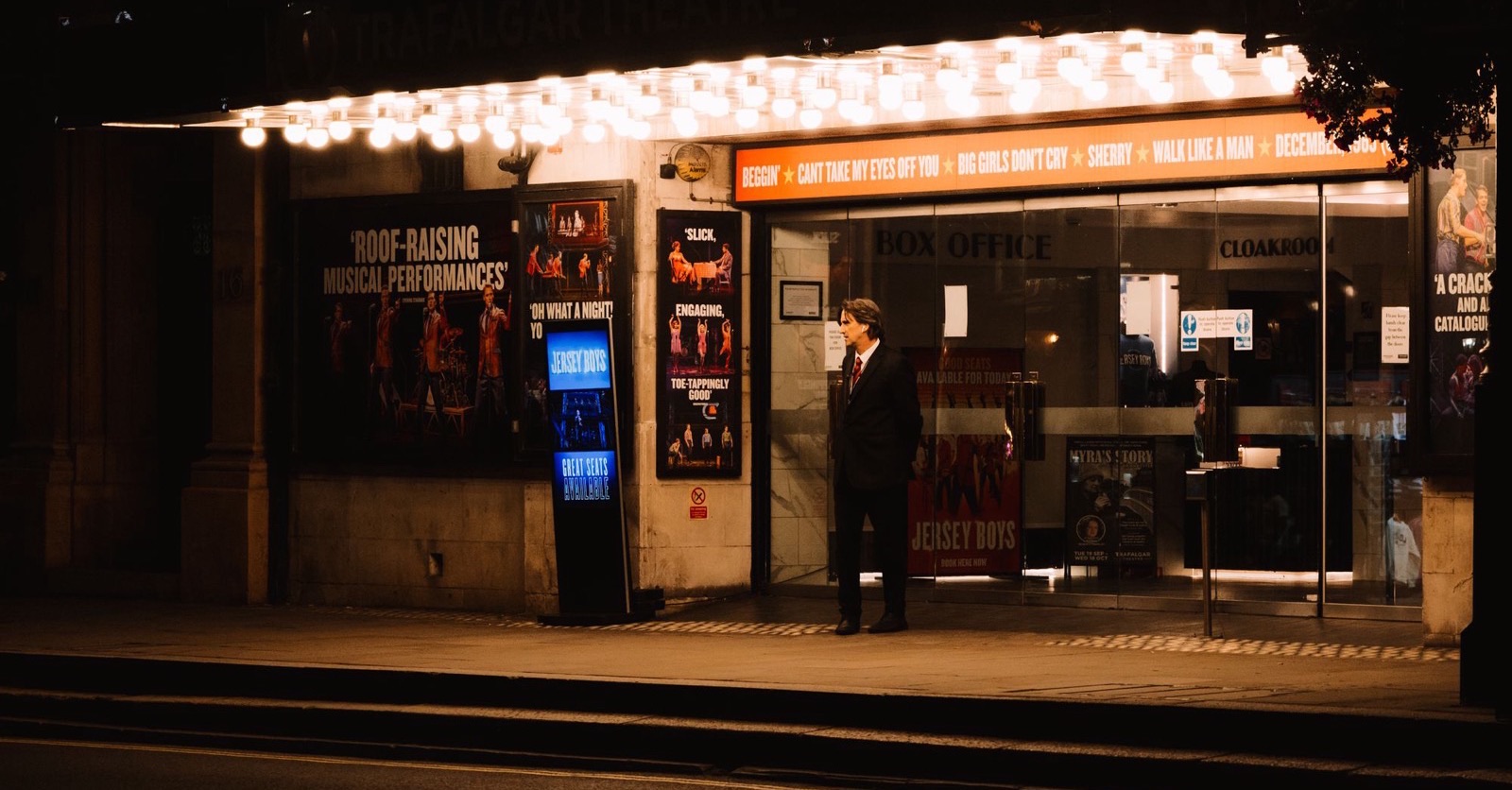
Oasis has to ration tickets. Most venues have to find their crowd
Oasis Live '27 sells only by registration, while UK grassroots venues sold 38.7% of capacity at ticketed shows in 2025. Why most rooms need reach instead.
Registration for Oasis Live '27 closes at 4pm BST on 17 September. There is no general onsale and no other public presale. Fans register at oasisinet.com, and the successful ones get a unique, non-transferable code for an allocated sale window. Even the code is no promise of a ticket: Ticketmaster's help page for the tour says demand "is expected to be greater than the number of tickets available."
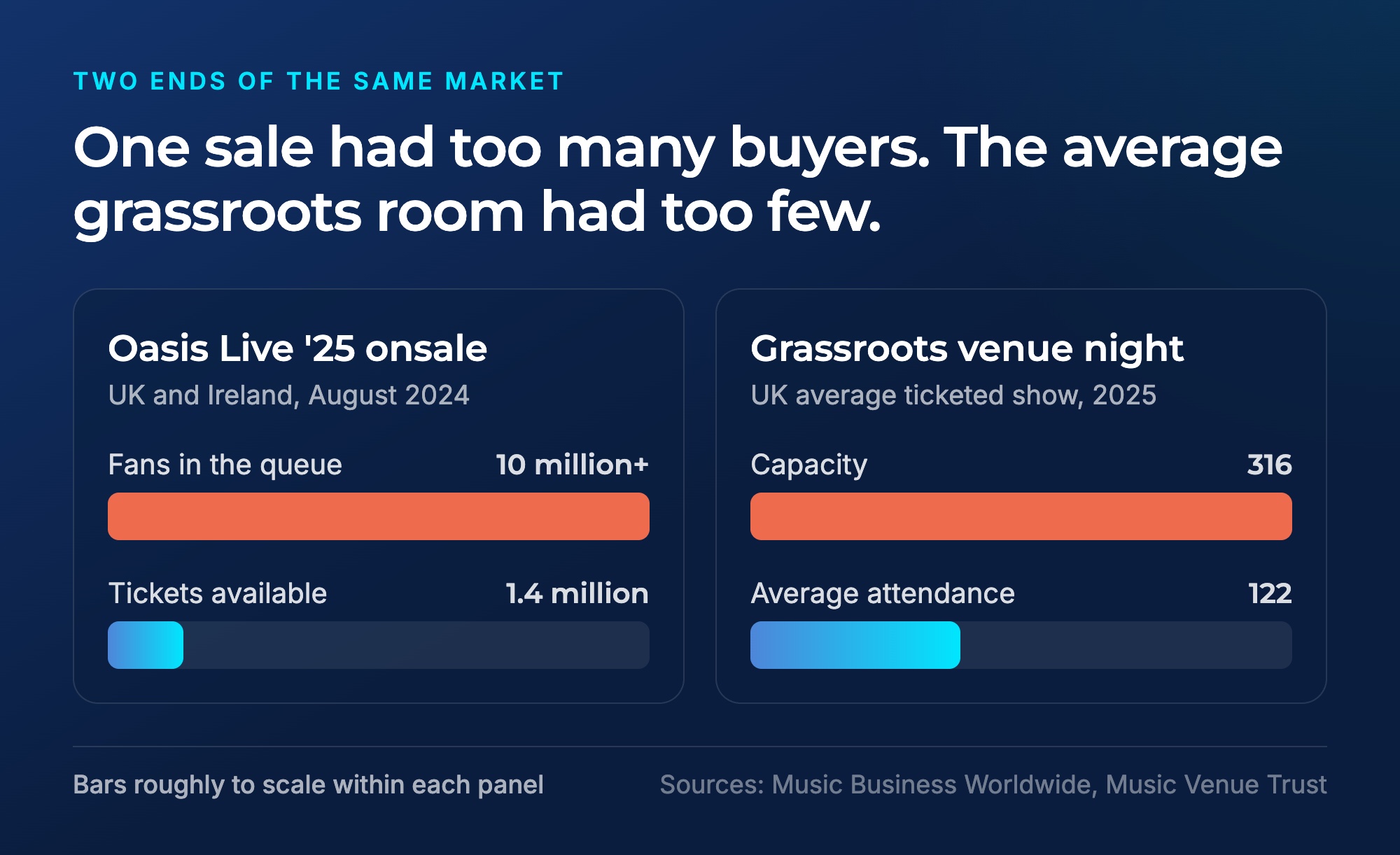
The band has reason to be careful. When Live '25 went on sale in August 2024, more than 10 million fans from 158 countries queued for the UK and Ireland onsale, against 1.4 million tickets, according to Music Business Worldwide. The 2027 system exists to share out a crowd far bigger than 38 stadium shows can hold.
Most of the live business has the opposite problem. Most of what the industry argues about in ticketing (queues, price tiers, touts, resale caps) is about too much demand. For the rooms most people in this business actually run, the hard part is getting the right people to know the show exists.
What an average grassroots night looks like
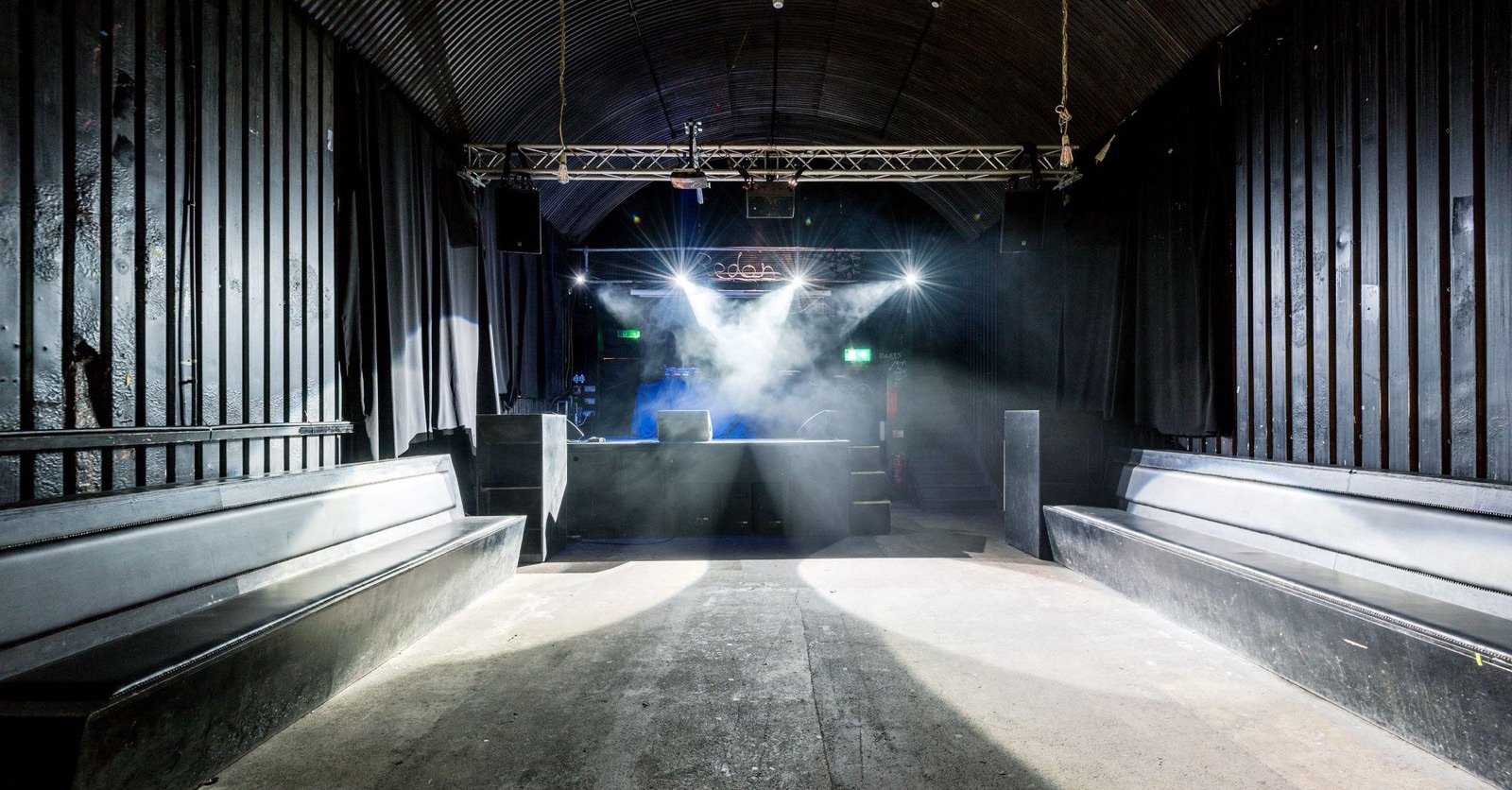
Music Venue Trust's annual report for 2025 counts 801 grassroots music venues trading in the UK. The average one holds 316 people. Ticketed events ran at 38.7% of capacity, which the Trust puts at an average of 122 people a show.
People have not stopped going. Attendance across the sector recovered to 21,683,552 in 2025, and the average venue staged 217 events, up from 196 the year before. The money is still thin: 53.8% of venues reported no profit in the previous 12 months, and the average profit margin was 2.5%.
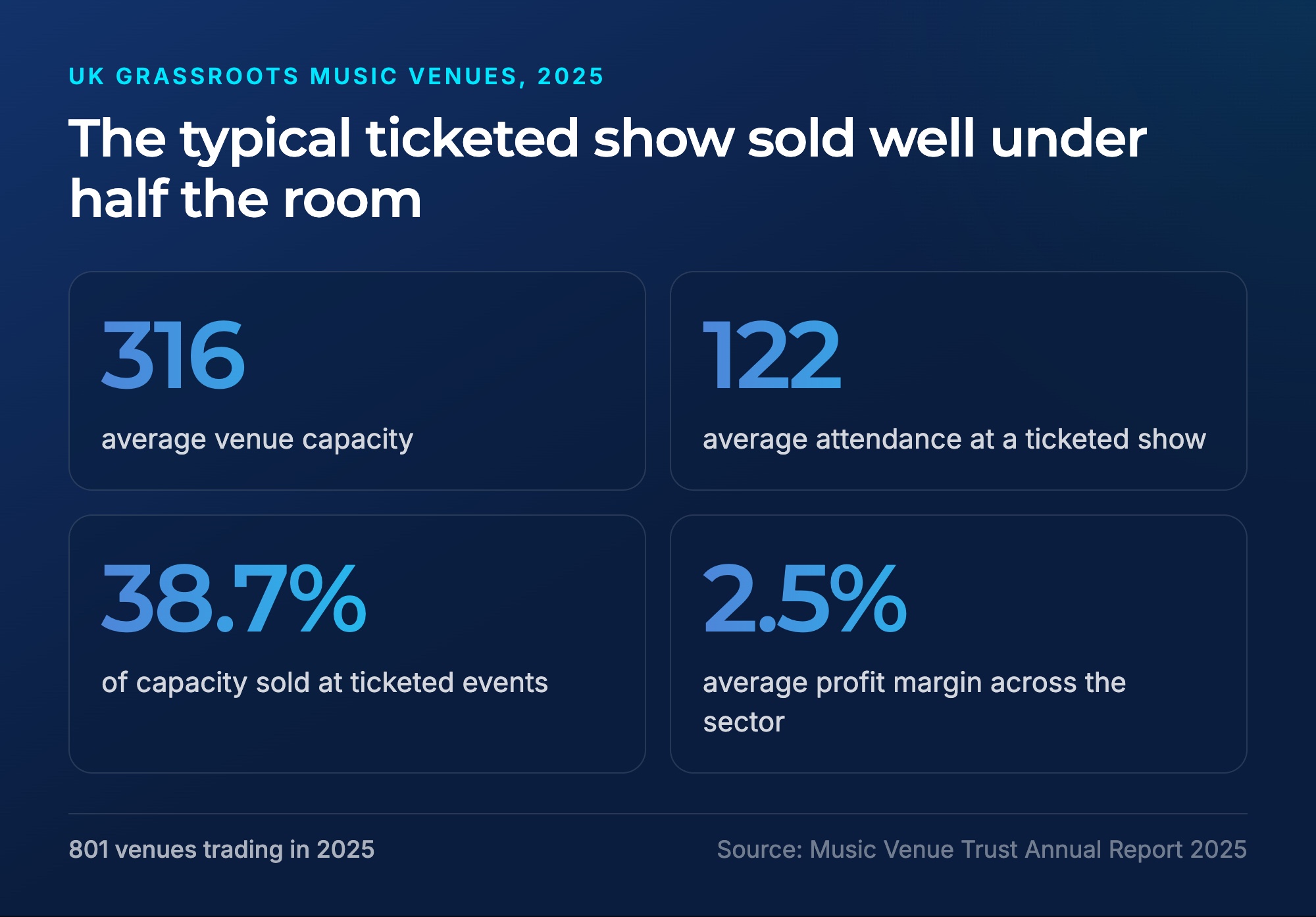
On a 2.5% margin, I would argue that the unsold 61% of the room is the biggest thing a venue can still change. Rent, rates and artist fees are hard to move.
Rationing tools do nothing for a half empty room
Registration windows, fixed price bands and cancelled resale tickets are ways to decide who gets in when too many people want to. They are the right tools for Oasis. A venue selling 122 tickets in a room of 316 has nobody queuing, so none of them apply.
Big touring names do not close the gap for most of the circuit either. The same report found that 59.3% of grassroots venues were left off significant tour routings in 2025, and that 221 UK towns and cities with a grassroots venue did not get significant touring artists at all. In those places, the audience has to be built locally, one show at a time.
How younger audiences say they pick a night
When a show is slow, the usual answer is more announcing: another post, another story, some paid reach. That only works if the missing people would have come had they seen it in a feed.
Eventbrite's Social Study surveyed 4,051 people aged 18 to 35 in the US and UK in July 2025. 69% said they rely on personal networks and word of mouth to find experiences, and 52% said they prefer under the radar events. Eventbrite's own advice to organisers was to work with trusted voices, past attendees and local creators to "make discovery feel authentic."
Money makes people choosier still. In research the NTIA published with Obsurvant in April, 68% of young people said economic conditions had cut how often they go out, and 53% said they were spending less on nightlife than a year earlier. One in three lower earners said going out is now unaffordable. The NTIA's reading is that demand is being suppressed rather than disappearing. A person who goes out once a month instead of three times needs a better reason than a post that scrolled past.
Where a personal invite fits
If most young people hear about their nights from someone, the useful question for a venue or promoter is how to reach each likely guest in that same personal way, without asking friends to do all the work.
That is the problem Krowded works on. It finds people on Instagram who fit a specific event and sends each of them a personal invite from the organiser's own account, through a browser extension. The invite comes from the venue or promoter the guest would be going to see, and it lands in the same inbox as messages from friends.
A good booking and a fair price still come first, and an invite cannot rescue a weak line up. What it changes is who hears about the show before the night. In a room running at 38.7%, I suspect many of the missing people live nearby and would have liked the night, but nobody told them.
What I would track next season
For every show, record how each buyer heard about it, and split the answers into two groups: people reached by a person (a friend, the artist, a direct invite) and people reached by a public post or an ad. Then compare the two against capacity across a few months. If the personal group is small and the room sits below half full, reach is the likely problem, and more posts are unlikely to fix it.
If you run rooms or a promoter company and want to compare notes on this, get in touch. For the pricing side of the same debate, see our piece on dynamic ticket pricing and the UK rules.
FAQ
What is the average attendance at a UK grassroots music venue?
Music Venue Trust's annual report for 2025 puts the average grassroots venue capacity at 316. Ticketed events ran at 38.7% of capacity, which works out at an average of 122 people a show. Across the 801 venues the Trust counted, total attendance was 21,683,552, and the average venue staged 217 events in the year. The same report found 53.8% of venues made no profit over the previous 12 months.
How are Oasis Live '27 tickets being sold?
Only through registration. There is no general onsale and no other public presale. Fans registered at oasisinet.com between 14 and 17 September 2026, and the successful ones receive a unique, non-transferable code for an allocated sale window. In the UK those windows run on 25, 26 and 27 September. Standard prices are fixed between £71.50 and £266.60 including fees, and a code does not guarantee a ticket.
How do young people find live events to go to?
In Eventbrite's Social Study, a survey of 4,051 people aged 18 to 35 in the US and UK, 69% said they rely on personal networks and word of mouth to find experiences. 52% said they prefer under the radar events and 36% said they enjoy hunting for hidden gems. That points organisers towards personal routes, such as past attendees, trusted local voices and direct invites, rather than general announcements alone.
Sources
- Music Business Worldwide: Oasis announce 38-date Live '27 tour, with fixed ticket prices and no general onsale
- Ticketmaster UK Help: Oasis Live '27
- Music Venue Trust: Annual Report 2025 (PDF)
- Eventbrite: Social Study report reveals the Reset to Real
- NTIA: 1 in 3 can't afford a night out, research with Obsurvant (April 2026)