UK festival cancellations in 2026, and a £408 Glastonbury ticket
36 UK festivals have fallen in 2026 while Glastonbury sets a £408 price. What the AIF cancellation list says about ticket sales, costs and independents.
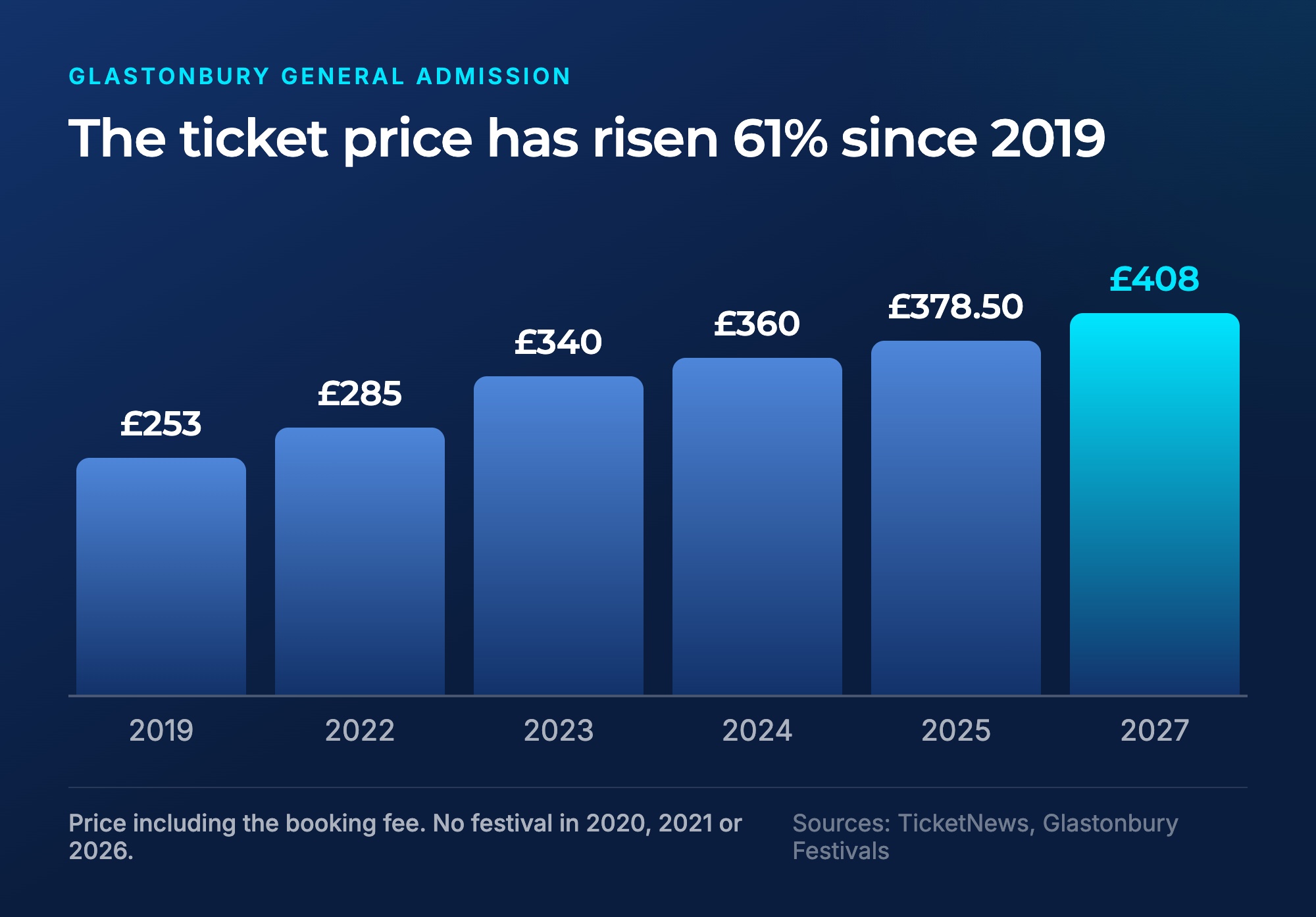
A general admission ticket for Glastonbury 2027 will cost £408, including a £5 booking fee. It is the first time the festival has gone past £400. Over the same season, the Association of Independent Festivals (AIF) has logged 36 UK festivals that were cancelled, postponed or ended for good in 2026.
Both numbers come from the same market. A few big brands can raise prices and still sell out, while a long list of smaller events cannot sell enough tickets to cover what it costs to put them on. If you run, book for or invest in independent festivals, the AIF list is worth reading entry by entry, because the reasons organisers give point at a problem that pricing does not fix.
A record price from a festival that can charge it
Glastonbury's price has climbed fast since the pandemic. TicketNews went through the festival's own announcements: £253 including the booking fee in 2019, £285 in 2022, £340 in 2023, £360 in 2024 and £378.50 in 2025. The 2027 price is 61% higher than 2019's. General admission goes on sale at 9am on Sunday 4 October, and buyers can hold a ticket with a £100 deposit.
The other big names have moved the same way. Reuters reported in August that a Reading or Leeds ticket for 2026 can cost as much as £361, up from around £230 in 2019. The same report said Download and We Out Here sold out in record time this year, Boomtown sold out at record speed, and Isle of Wight and End of the Road sold out too.
Jack Needham, head of content at Festival Insights, argues that prices at influential festivals like Glastonbury set a marker for what others can charge. I would add that the marker only works for an event with the demand to stand behind it.
What the 2026 cancellation list says
The AIF keeps a running list of festivals that fall each year: 78 in 2024, 43 in 2025 and 36 so far in 2026. Reuters noted that this year's figure could be the lowest since COVID-19. The pool is smaller too. The AIF estimates there were 800 to 900 festivals at the peak in 2018 and 2019, and 592 in 2025.
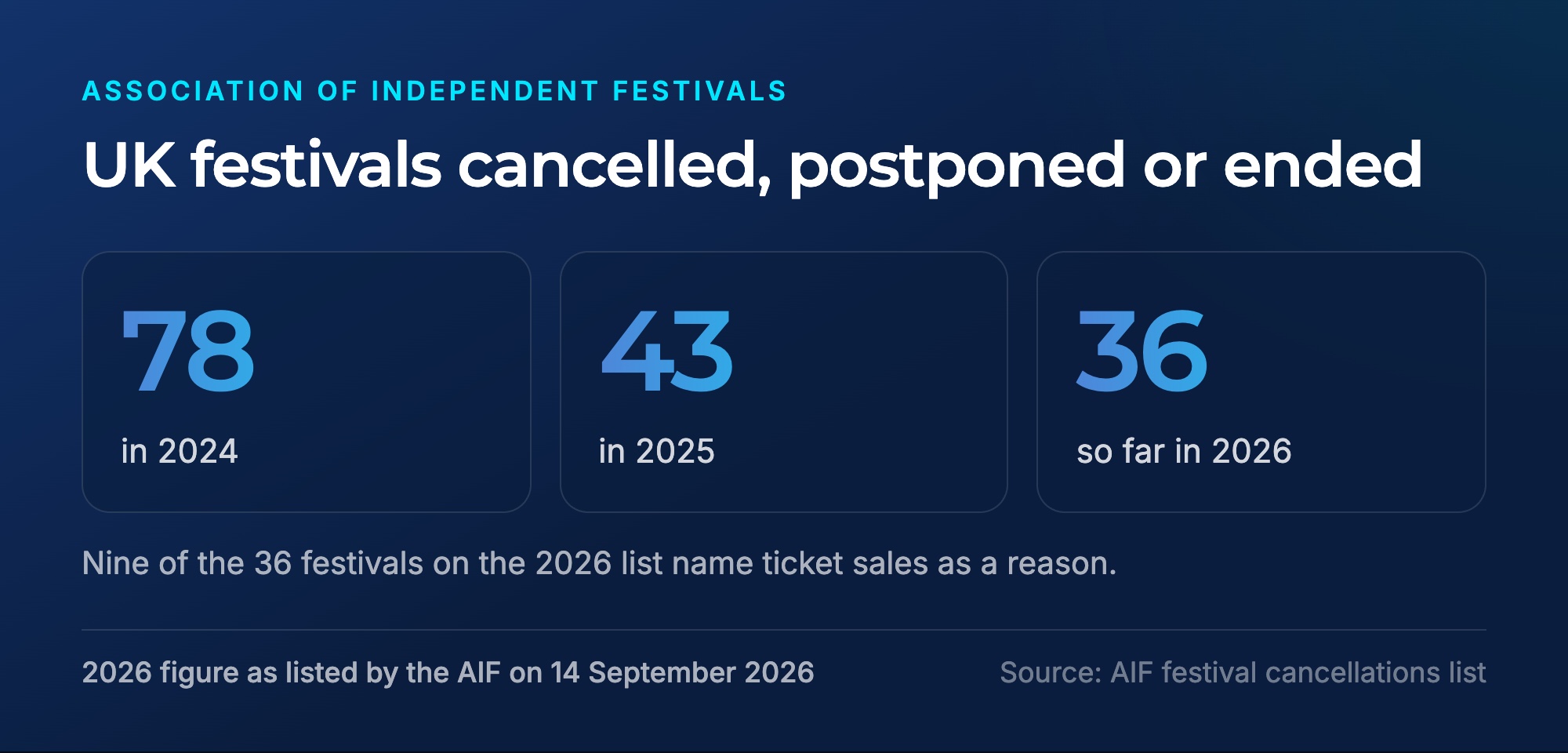
I read all 36 entries for 2026. Nine of them name ticket sales as a reason, in words like "low sales", "poor ticket sales" or "reduced ticket sales". Others point to rising costs, liquidation, venue problems or a fallow year, and several give no reason at all. Four of the sales cases:
- Womad Glasgow, in what would have been its first edition, was cancelled due to low ticket sales.
- Replay Perth postponed to 2027 due to low sales, and its organisers blamed BBC Radio 2 In The Park for the slump.
- Red Rooster came to an end, citing "a combination of reduced ticket sales, rising operational costs and ongoing financial pressures".
- Hush was cancelled over poor ticket sales and rising production costs, and may put on a micro event on some of the dates instead.
In most of these statements sales and costs arrive together. A festival commits to a site, production and staff months before it knows how many people are coming. When costs rise, the number of tickets it needs to sell rises with them, and a slow on-sale turns into a cancellation sooner.
Demand is still there, and it is choosy
The AIF's chief executive, John Rostron, described the split in June: "Mostly, we're seeing very strong demand from audiences, and some record sellouts, but independent festival promoters are seeing their margins become ever thinner".
Buyers are spending, but carefully. Boomtown's managing director, Toby Gwazdacz, told Reuters that "Customers are being more selective with their spend and their disposable income". Many are also spreading the cost. Kaboodle told Reuters that about 45% of tickets for Britain's camping festivals are typically bought with a payment plan on its platform, and Mighty Hoopla co-founder Jamie Tagg estimated that 70% of Mighty Hoopla buyers use one. Tiered ticketing is now used by almost all British music festivals, according to the same report. (We looked at what the UK rules mean for tiers in an earlier piece on dynamic pricing.)
A selective buyer compares, and the Replay Perth entry shows what that can mean for a smaller event: its organisers blamed a bigger one, BBC Radio 2 In The Park, for their slump in sales.
The biggest events now sit with the majors
Reuters reported that major companies now own nearly all of the biggest UK events, including Isle of Wight, Reading and Leeds and Download, and that Mighty Hoopla and Boomtown have sold stakes to them. Heritage Live, which cancelled three festivals in July, said the "might of huge multi-nationals" has driven up supplier, artist and staffing costs. A spokesperson for a major festival company told Reuters the market is shaped by several factors, including inflation and rising production costs, and not by any single company.
At least one European regulator has stepped in. In Belgium, the competition authority closed its investigation into Live Nation's purchase of Pukkelpop, a festival with a capacity of roughly 250,000, after Live Nation agreed to keep the festival operationally separate for at least 10 years. Under those commitments, reported by TicketNews, an entity controlled by founder Chokri Mahassine keeps authority over artist bookings, ticket prices and suppliers.
What independents are asking for
In June the AIF asked the UK government for three things: extend the temporary reduced VAT rate on children's tickets, meals and family attractions (which covers family and children's festival tickets) into 2027; make sure the Creative Industries Sector Plan and Music Growth Package, worth £30m over three years, includes support for independent festivals; and pilot tax relief for grassroots festivals.
Some organisers are choosing to get smaller instead. Festival Insights notes that Northern Ireland's Stendhal Festival is downsizing for 2027 to balance the books.
What I would take from 2026
An independent festival cannot copy Glastonbury's pricing, because it has no waiting list to lean on. What it can work on is reach: how many of the people who would enjoy the event hear about it, and how early they hear. That is the gap behind nine of this year's 36 entries. Payment plans help a buyer who has already decided to come. They do nothing for someone who never heard of the festival.
So I would plan an independent festival's on-sale around finding its audience first, and treat the early months of sales as the measure of whether that is working, well before costs are locked in. That is also the problem Krowded works on: it finds people on Instagram who fit an event and sends each one a personal invite from the organiser's own account.
FAQ
How many UK festivals were cancelled in 2026?
The Association of Independent Festivals counts 36 UK festivals so far in 2026 that were cancelled, postponed, took a fallow year or ended for good. That compares with 43 in 2025 and 78 in 2024. Reuters noted this year's total could be the lowest since COVID-19, although there are also fewer festivals than before: it estimates 592 in 2025, down from 800 to 900 at the 2018 and 2019 peak.
Why are UK festivals being cancelled?
Where the AIF's 2026 list gives a reason, it is usually money. Nine of the 36 entries name weak ticket sales, often alongside rising operational or production costs. Others cite liquidation, venue problems or a fallow year to reassess, and several give no reason. Festivals commit to sites, production and staff well before they know final sales, so higher costs leave less room for a slow on-sale.
How much is a Glastonbury 2027 ticket?
General admission for Glastonbury 2027, which runs from 23 to 27 June, costs £408 including a £5 booking fee, plus postage and packing. It is the first Glastonbury ticket over £400. Tickets with coach travel go on sale at 6pm on Thursday 1 October 2026, and general admission at 9am on Sunday 4 October 2026. Buyers must be registered in advance and can pay a £100 deposit.
Are UK festival ticket sales down in 2026?
It depends on the festival. Reuters reported record sellouts at Download and We Out Here, and the AIF describes very strong demand from audiences overall. At the same time, nine of the 36 festivals on the AIF's 2026 list named low or poor ticket sales, and Boomtown's managing director said customers are being more selective with their spending.
Sources
- Glastonbury Festivals: Info, tickets for Glastonbury 2027
- Association of Independent Festivals: Festival cancellations
- Reuters via Aaj English TV: UK music festivals stage comeback as fans return despite rising costs
- TicketNews: Glastonbury Tickets Hit Record £408, Up 51% From Pre-Pandemic Asking Price
- Festival Insights: Glastonbury announced for 2027, with tickets breaking the £400 barrier
- Festival Insights: Glastonbury and a £408 wristband, are ticket prices going too far?
- Festival Insights: AIF calls for UK Government intervention amidst growing number of festival cancellations
- TicketNews: Belgian Authorities Green Light Live Nation's Pukkelpop Acquisition, With Conditions